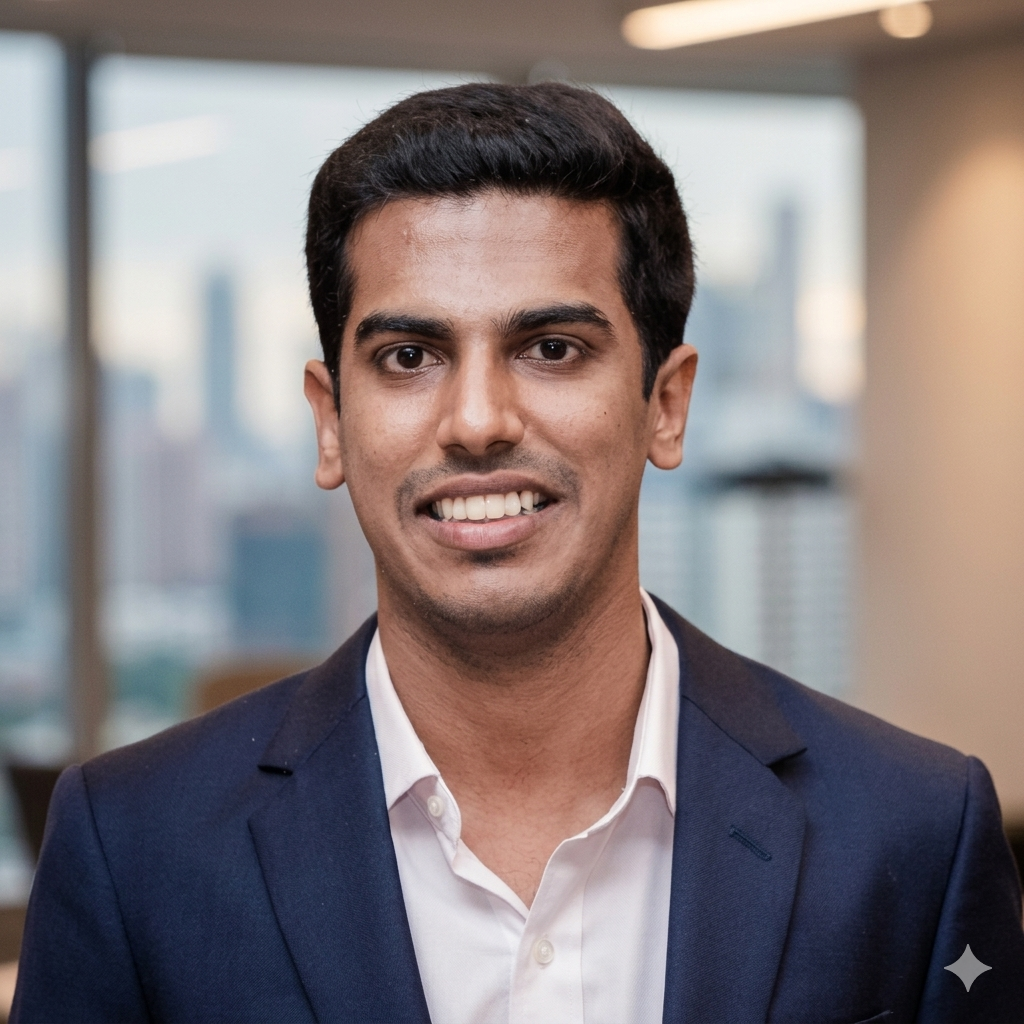
Aditya Bandla, PhD

Nature-based Solutions Scientist
Soil Carbon MRV & Interventions Specialist

More carbon in the ground. Less risk on the books.

Carbon accounting treats soil as a static system. Models produce a number — but soil is alive, and whether that carbon stays or leaves depends on biology that standard measurement cannot see. That is where the risk is.

I'm a scientist and strategist with a PhD in Soil Ecology and ten years of applied research across South East Asia. Over eight years I grew into leading a team of scientists and field staff on a landscape-scale peatland carbon programme — directing field campaigns, developing sampling and measurement methodology, and owning the programme's science outputs. I bring an established network across the region and am now expanding into North America.

Standard carbon measurement tells you how much carbon is in the soil. I look at what is happening inside it — the biological processes that determine whether carbon stays or breaks down. That distinction is where permanence risk hides.

I work across the full project lifecycle — from selecting and trialling soil health interventions like microbial inoculants and native transplants, to designing the MRV frameworks that prove they worked.

I bridge the gap between a Nature paper and a bankable credit.

Producers & Supply Chain
Design a regenerative portfolio that holds up to scrutiny — from selecting interventions like inoculants, native transplants, and cover crops, to sequestration strategy and what to measure before your buyer runs their own assessment.
Project Developers
Methodology review and protocol design — identify permanence risk and the biological signals your carbon measurement is missing before they become a liability at issuance.
Service Providers
Scientific advisory and strategic input to make your offering credible — to clients, to regulators, and to the market.
Ratings & Intelligence
Independent frameworks for assessing permanence claims beyond the carbon number — drawing on biological signals from inside the soil that bulk sampling cannot reach.
Investors & Buyers
Technical due diligence on whether a credit portfolio carries the permanence risk it claims not to — before you commit capital.
Sustainability Teams
Independent analysis and supply chain sequestration strategy that separates credible removals from compliance optics.
Publications +
[1]
Bandla, A. et al. (2024). Elevated methane flux in a tropical peatland post-fire is linked to depth-dependent changes in peat microbiome assembly. npj Biofilms and Microbiomes, 10, 8. nature.com
[2]
Taillardat, P., Bandla, A. et al. (2025). Methane and carbon dioxide production and emission pathways in the belowground and draining water bodies of a tropical peatland plantation forest. Geophysical Research Letters. doi.org/10.1029/2024GL112903
Credentials & Background +
Education
PhD — Soil Ecology, National University of Singapore
BE — Agricultural Engineering, College of Engineering Guindy
Programme Leadership
Led scientists & field staff with progressively growing teams over eight years — landscape-scale peatland GHG programme, Southeast Asia
Directed field campaigns and sampling design across a landscape-scale site
Developed measurement methodology — GHG flux, microbiome, MRV protocol
Domain Expertise
Regenerative agriculture
Peatlands
Urban soils
Nature-based solutions (NbS)
Methods
Field GHG measurement & flux monitoring
Deep genomic sequencing — soil microbiome
Bioinformatics & computational workflows
MRV protocol development & review